MODE / 01
Build.
Make it real. Get a signal.
Prototype with AI, experiment and put something in front of a customer. Learn from what happens.
AI changes what you can build. Rebuilding changes how your organisation thinks, decides and grows.

The next challenge is changing the company while it’s still running.
You have customers, a team and a business that works. You also have assumptions built for a world that is changing. Adding AI tools is only the beginning.
A Rebuilder retests the business model, the strategy and the way people work together. On purpose. Before the old way stops working.
Read the founding essayA leader who moves deliberately between building, judgement and alignment, and turns that rhythm into an organisation’s ability to grow.
Different work calls for a different posture. The skill is knowing when to switch.
Make it real. Get a signal.
Prototype with AI, experiment and put something in front of a customer. Learn from what happens.
Decide what’s worth doing.
Challenge assumptions. Write predictions before you build. Use evidence and taste to keep, kill or scale.
Build a shared reality.
Invite dissent. Make decisions and their reasoning clear, so humans and agents can act together.
Three capabilities fuel each mode. Five core leadership mindsets underpin them all.
Execution is cheap, signal is not. You build to find out, not to ship.
Build the thing that settles the question in hours instead of writing the deck that describes it. Speed matters because it shortens time-to-signal, not because shipping is the point.
Design the cheapest test that produces a clean signal, and prefer signals someone paid for or acted on over signals someone reported. And hold your own agents to the same bar. An eval is just an experiment with a pass mark.
Build the way it reaches people into the product itself. When anyone can build anything, supply stops being the constraint and attention becomes it.
Options are cheap, so selection is the bottleneck. Including the largest selection of all: what this company is for.
Tell a strong idea from a merely plausible one before you spend a week on it, by comparing against examples rather than trusting your gut. At the top of the company the same act has a different name: the payoff function—choosing what this business is deep in.
Record what was decided, why, what good looks like, what’s out of bounds, what you rejected, and why you made the last exception. That last part is what your systems of record never hold, and it is the part an agent needs. At company scale, this capability is what builds the world model.
Write the prediction before you build, score it afterwards, and know how often you’re actually right.
The picture has to hold when you’re not in the room, and people have to believe it. Trust is what makes a decision travel.
Make disagreement cheap enough that you hear it while it’s still useful. Psychological safety is the result; this is the behaviour that produces it.
Write a decision down so it can be executed without you: what was decided, why, what good looks like, what’s out of bounds.
Tell real agreement from polite agreement, in time to do something about it.
How a Rebuilder shows up, whichever mode the work calls for.
Cultivate curiosity and rapid learning cycles that normalise experimentation and adaptation.
See whole systems and causal loops; design interventions that tackle root causes.
Set a bold long-term direction and sequence decisive bets toward lasting change.
Plan and sequence reforms, build coalitions, move from pilot to sustained adoption.
Sleep, train and recover properly. Energy and clarity are unfair advantages once tools are equal.
But you can tell whether the way you work has changed. Start with three questions.
Explore the six testsGive the people closest to the work authority over reversible decisions, inside written limits.
Record predictions before the work begins. Score them afterwards. Make learning visible.
Stopping a weak bet should be a routine decision, with a process and a named owner.
Agents can act. Humans remain accountable. Put a name, a test and a way back beside every agent in production.
First, test whether a rebuild is needed. Then use a digital twin to test workflows, scale what works and gradually migrate the core.
Look at what you charge for and where your costs sit. Locate the exposure in your own company.
What is the unit on our invoice: hours, seats, outcomes, or access to something physical?
Score the two mismatches separately: charging for what got cheap, and spending too much on coordination. Having both is the case for a rebuild.
Take one core workflow: how many days does it take, and how many minutes is anyone actually working on it?
Test whether your advantage survives when time and effort get cheap. A useful test must also be able to say: don’t rebuild.
If a competitor had our AI tools tomorrow, why would customers still choose us?
Identify which mode disappears under pressure. Strengthen it, then choose a route that fits your capacity and the constraints of the running business.
In the last bad quarter, what did we do more of: decide alone, start things, or review things?
Agree the protected resources, the expected dip, the review rhythm and the stopping conditions with the board. Put both sides’ commitments in writing.
Who signs the one-way doors, by name, and who is allowed to call the kill?
Run ten small probes from one connected bundle of workflows. Every probe starts with a prediction and a condition that will end it.
For each probe, what did we predict, and can we show it was written before the build?
Hold a 90-minute Wednesday gate. Review predictions, evidence, ownership and costs. Record one verdict: kill, keep or scale.
Did anyone pay for this or act on it, or were we only told that it worked?
Classify each workflow step: plain software, an agent, or human judgement. Name business, technical, risk and human approval owners.
After this bundle migrates, does it still pay anyone to sit still?
Move through four phases: Establish, Prove, Migrate and Normalise. Advance on evidence at each gate, with leadership one beat ahead.
Which gate would we fail today, and what is the one artefact that is missing?
Establish → Prove → Migrate → Normalise
Progress through evidence. Repeat as the world changes.
Three essays. A starting point that keeps evolving.
We bring hands-on experience in digital growth, leadership and organisational change, working with startups, scaleups and larger organisations.
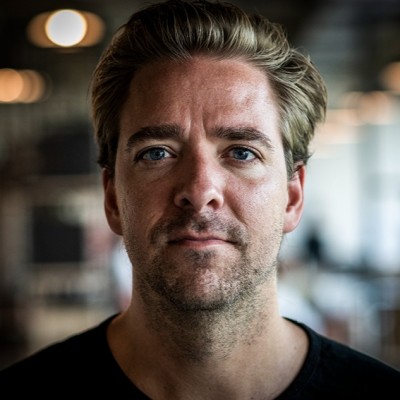
Peter co-founded Growth Tribe and trained 38.000 people from 900 organisations and helped more than 250 companies develop their growth and GTM strategies. He brings experience building teams and scaling digital learning to help leaders turn experimentation into organisational change.
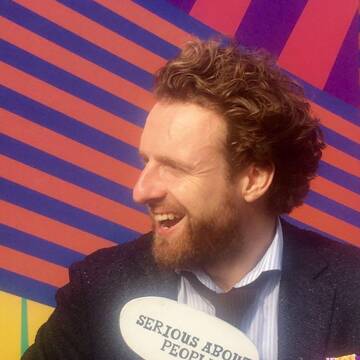
Maarten brings digital, commerce and leadership experience from Suitsupply, Tony’s Chocolonely, Albert Heijn and MediaMarkt. He connects conscious leadership development with AI strategy, creating the conditions for authentic ambition to become clear direction and effective execution.
Connect on LinkedInLet’s explore what rebuilding means for your leadership, your team and your organisation.
Book a call Follow on Substack